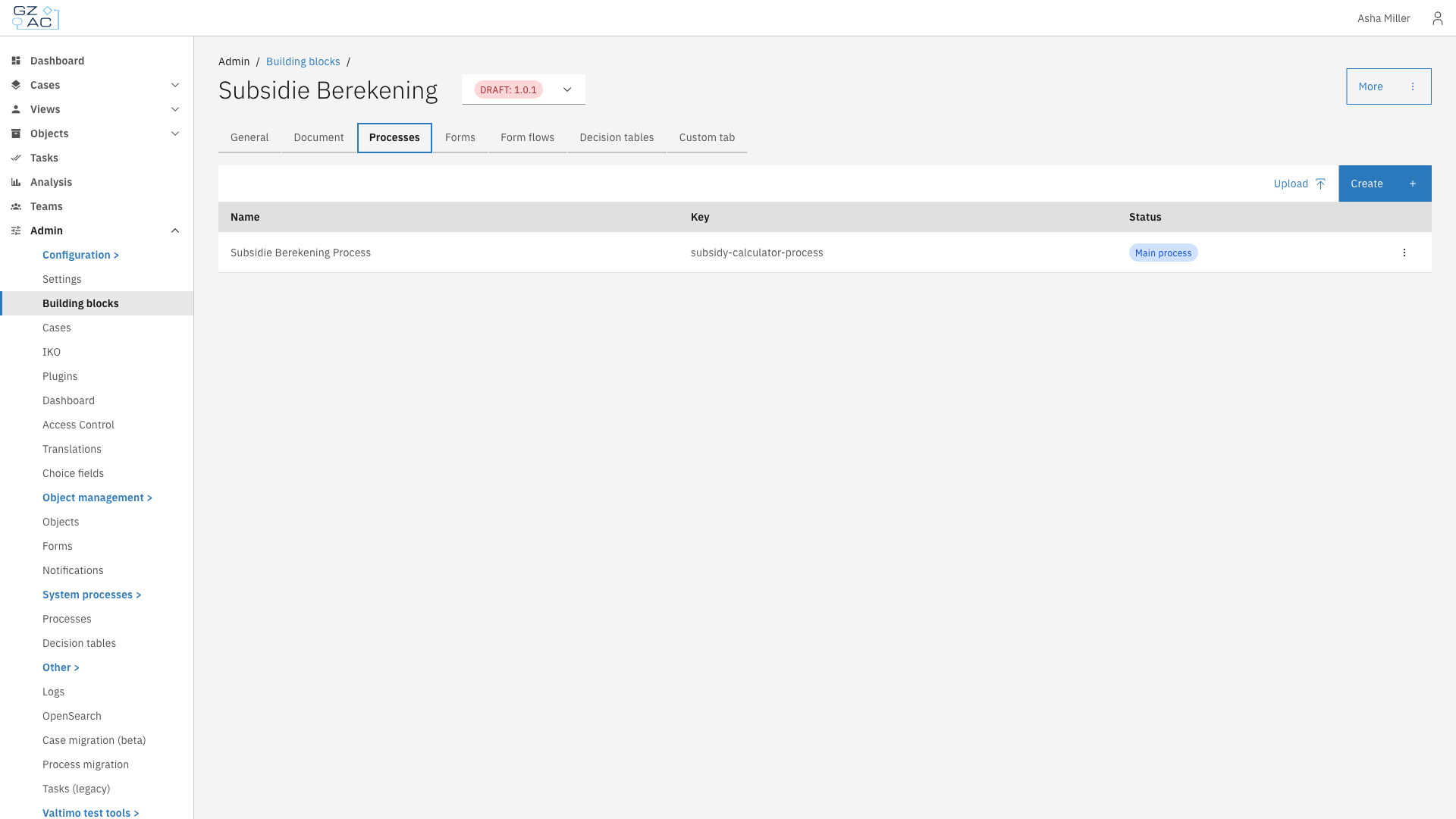
Processes
The Processes tab manages BPMN process definitions within a building block. Processes define the automated workflows that execute when the building block is used.
Each building block can contain multiple process definitions. One process is designated as the main process, which serves as the entry point when the building block starts. Additional processes can be included as supporting workflows (e.g., sub-processes, call activities).

The process list displays:
Name
Display name of the process definition
Key
Technical identifier used in BPMN references
Status
Shows Main process tag for the designated main process, and Draft tag for unpublished processes
Adding a process
Processes can be added by creating a new process in the BPMN modeler or by uploading an existing BPMN file.
Creating a new process
Click Create in the toolbar
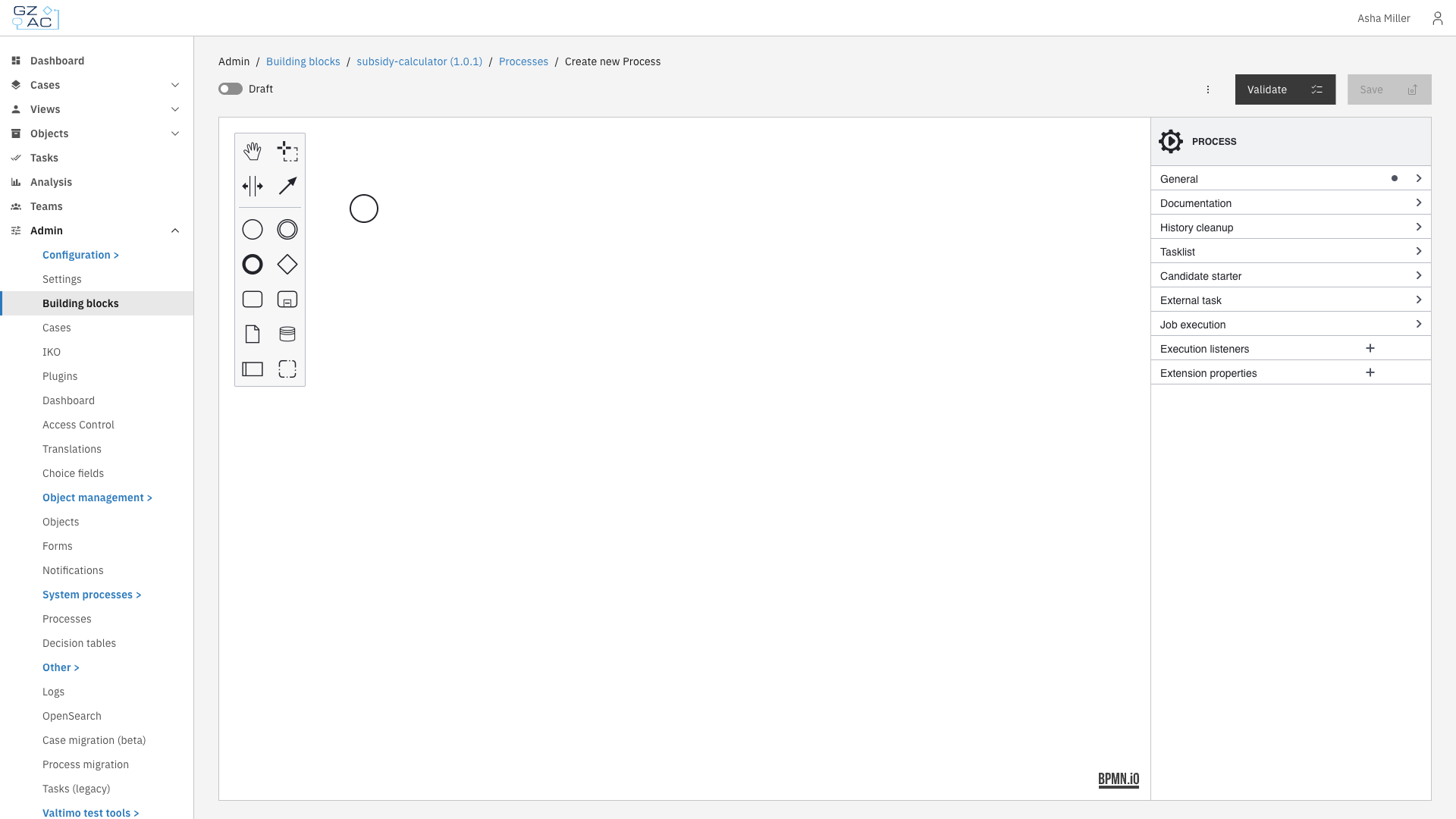
The BPMN modeler opens with an empty canvas

Design the process using the BPMN palette on the left. The properties panel on the right allows configuring element details.
Toggle Draft to save without validation, or leave it off to validate the process on save
Click Save to add the process to the building block
Uploading a BPMN file
Click Upload in the toolbar
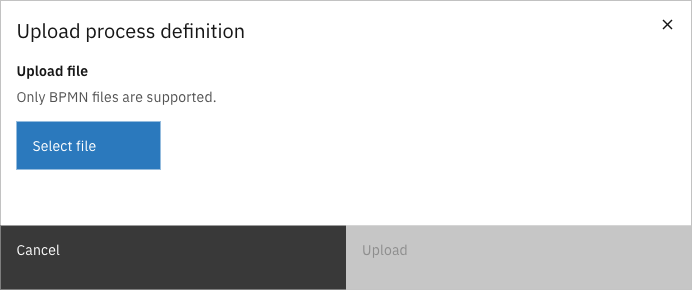
The upload dialog appears

Click Select file and choose a .bpmn file from your computer
Click Upload to import the process
Managing processes
Editing a process
Click on a process row to open it in the BPMN modeler. Make changes and click Save to update the process definition.
Setting the main process
The main process is the entry point when the building block starts. To change which process is the main process:
Click the overflow menu (three dots) on the process row
Select Mark as Main
Deleting a process
Click the overflow menu (three dots) on the process row
Select Delete
Confirm the deletion in the dialog
Process links
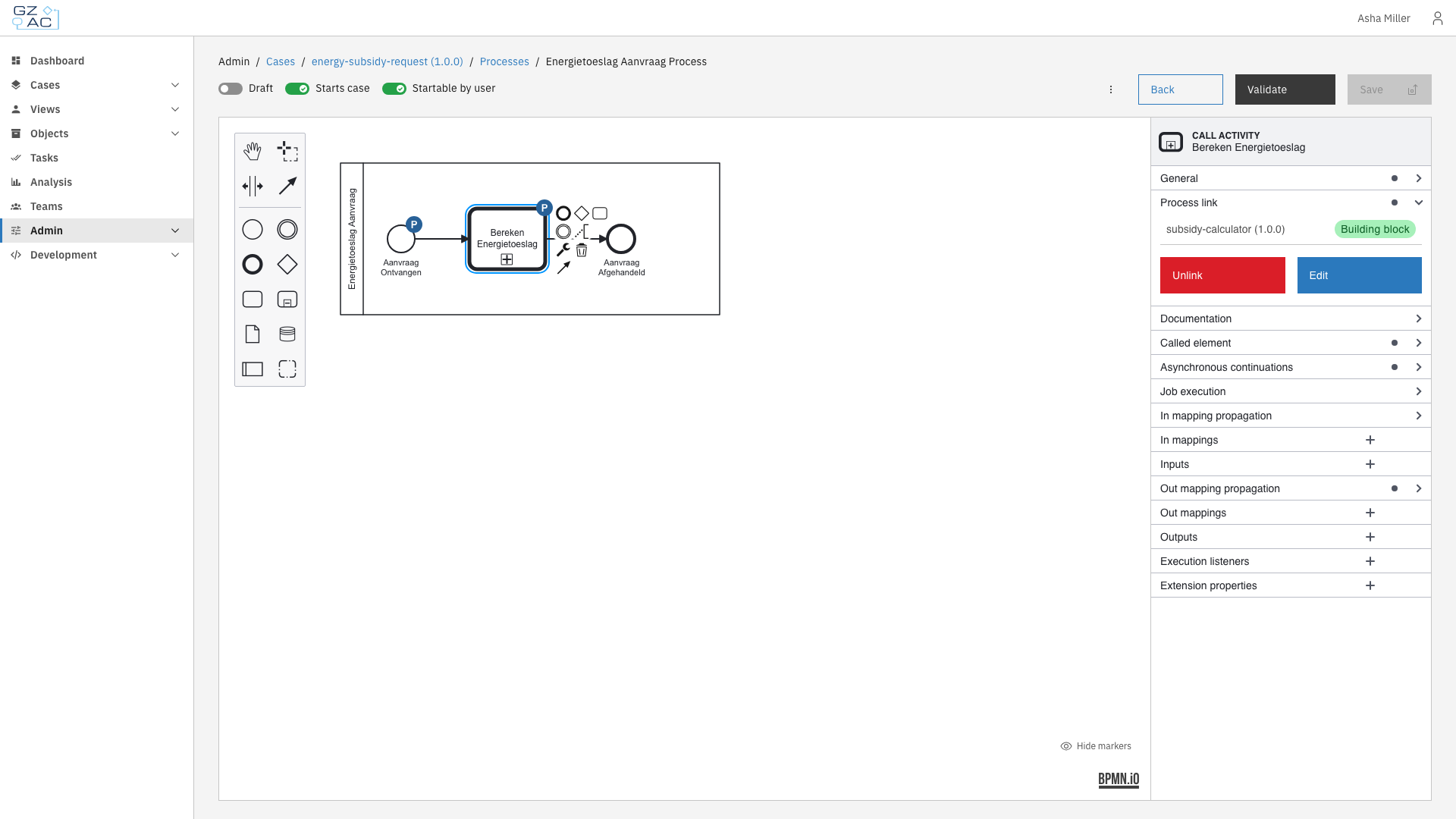
Process links connect BPMN activities to external functionality. When you select a linkable element in the modeler, a Process link panel appears in the properties sidebar with a Create button.
Form
Link to form definitions for collecting user input
Form flow
Multi-step form workflows for complex user interactions
Building block
Invoke another building block via Call Activity
Plugin
Execute plugin actions (e.g., API calls, document generation)
UI component
Custom Angular UI components for specialized interfaces
To create a process link, select an element in the modeler and click Create in the Process link panel. To remove an existing link, click Unlink.
Building block call activities
A call activity can run a building block. This works in any process editor: a case process can call a building block, and a building block process can call another building block. The linked building block runs in its own isolated context, with its own document.
Linking a building block to a call activity
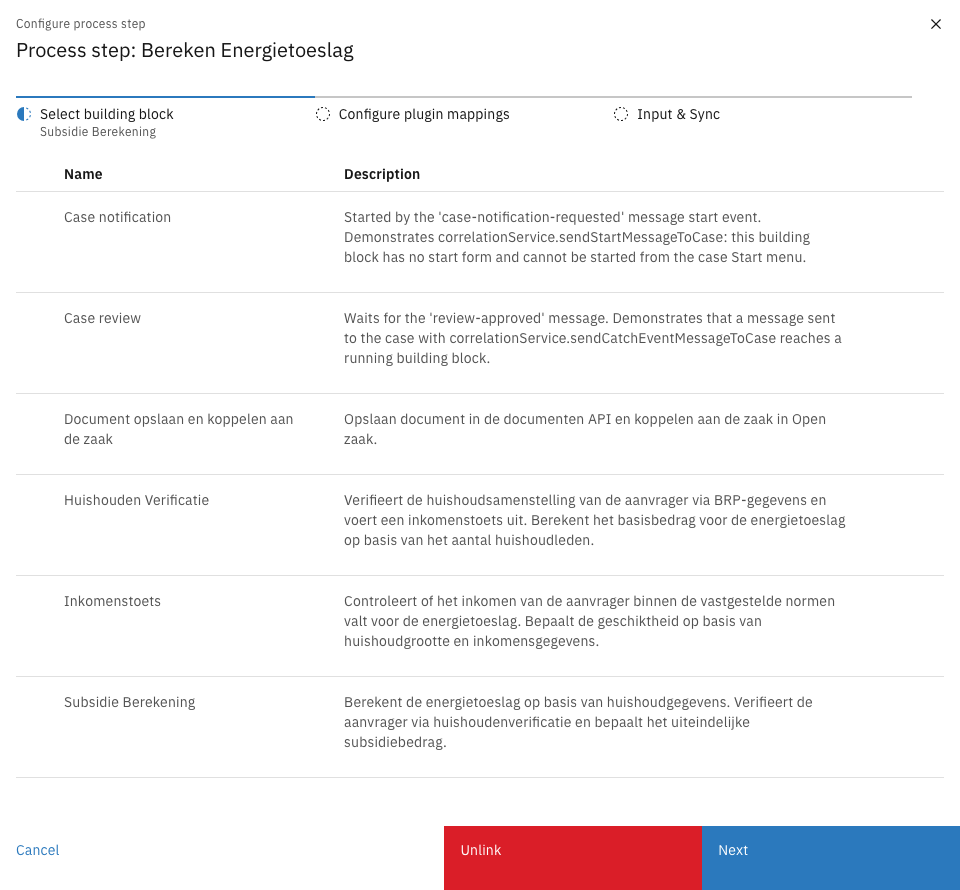
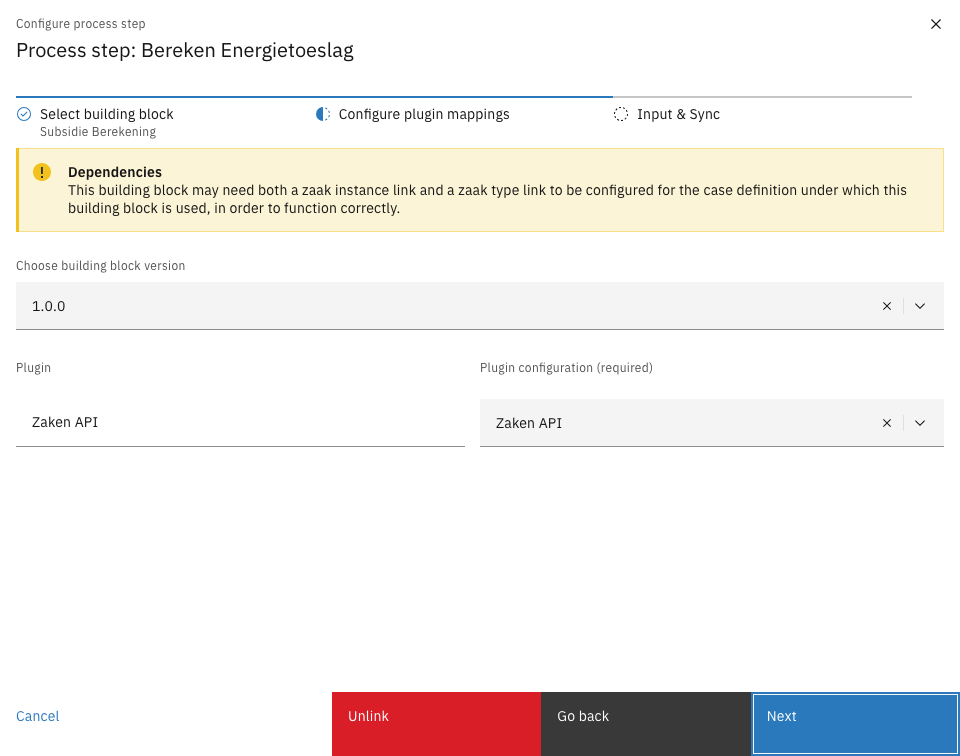
Select the call activity in the modeler and click Create in the Process link panel. For an existing link, click Edit.

Choose Building block as the link type and select the building block to call

Choose the building block version and select a plugin configuration for every plugin the building block requires

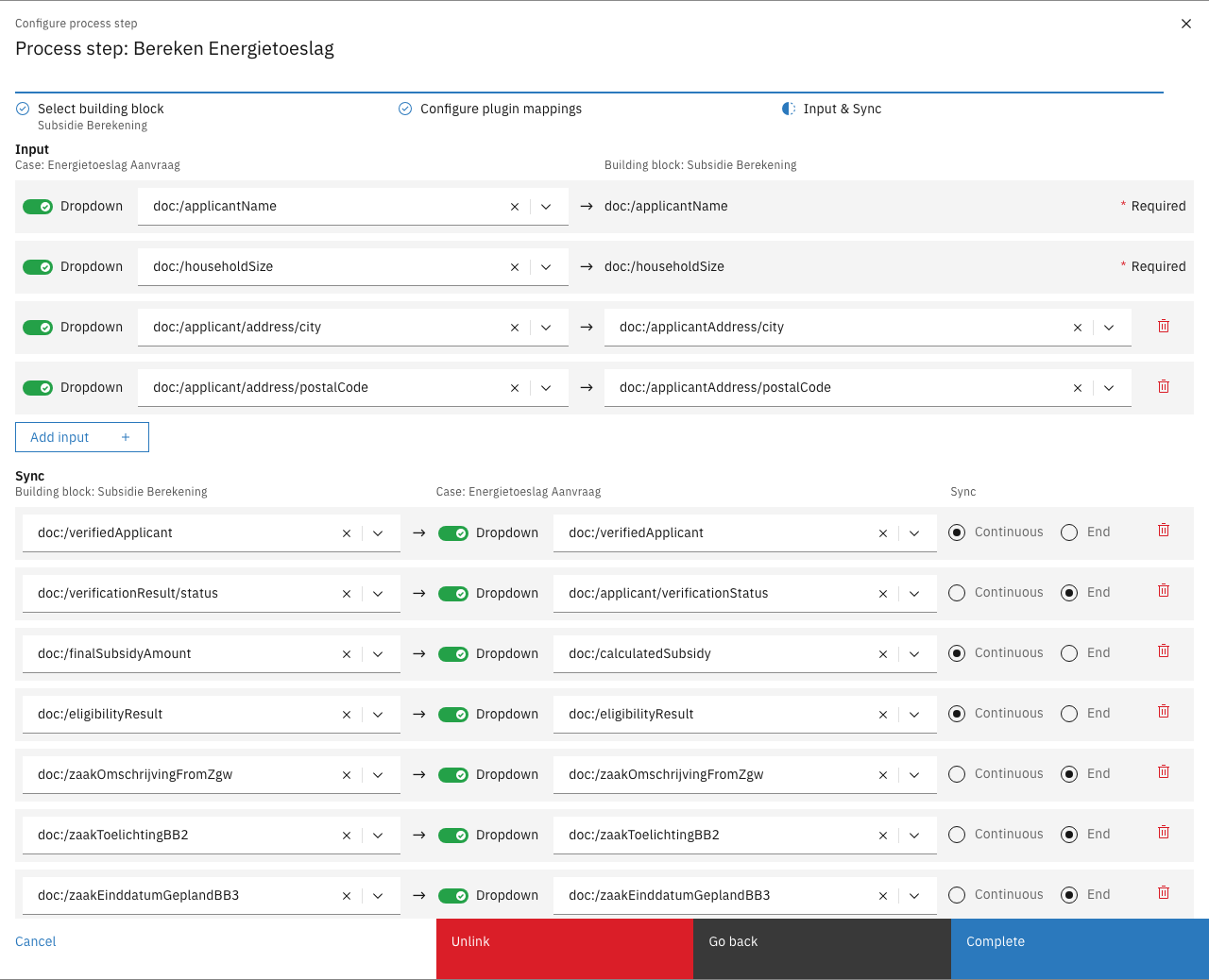
Map the inputs and outputs of the building block in the Input & Sync step

Click Complete to save the link, then click Save to save the process
How data flows in and out of a building block
A building block does not read case data directly. Values enter and leave a building block through its own document, based on the mappings of the call activity link:
Input
Caller → building block
Written to a building block field (doc:) when the building block starts
Sync
Building block → caller
Read from a building block field (doc:) and written back to the caller
The caller side of a mapping can be any value: a case document field, a process variable, or a fixed value. The building block side is always a building block field. Each sync mapping has a timing:
End
The value is written back when the building block completes (default)
Continuous
The value is written back on every saved change while the building block is still running
Inside a building block, always reference values with the doc: prefix (for example doc:/applicantName). Mapped inputs never become process variables of the building block process: a pv: reference inside a building block only resolves process variables that the building block sets itself, and resolves to empty for caller data.
The business key mapping
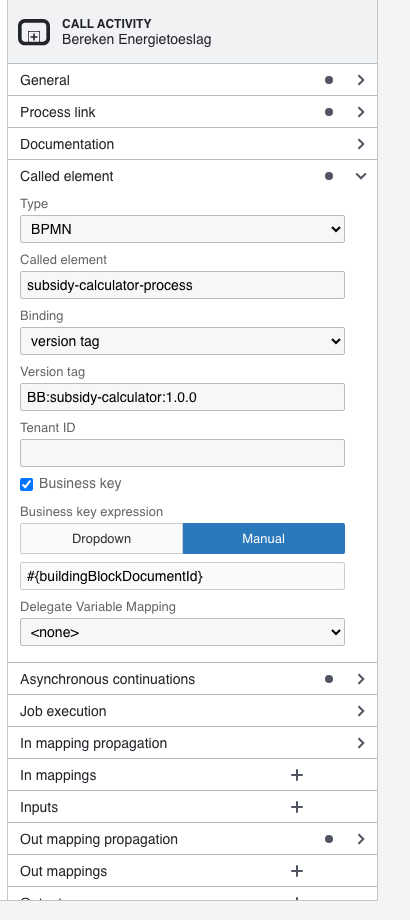
The called building block process runs under the building block document id as its business key. Everything inside the building block resolves its context through this business key; with a wrong or missing mapping the building block silently runs against the wrong document.
The editor configures this automatically when a building block is linked: the Business key option under Called element is enabled with the expression #{buildingBlockDocumentId}.

For uploaded BPMN files, mind the XML namespaces on the call activity. The process engine ignores all camunda: extension elements as soon as one operaton: element of the same type is present — a common leftover of a Camunda-to-Operaton migration. A correct camunda:in business key mapping next to any operaton:in element is dead configuration.
Validation of building block links
Available since Valtimo 13.43.0
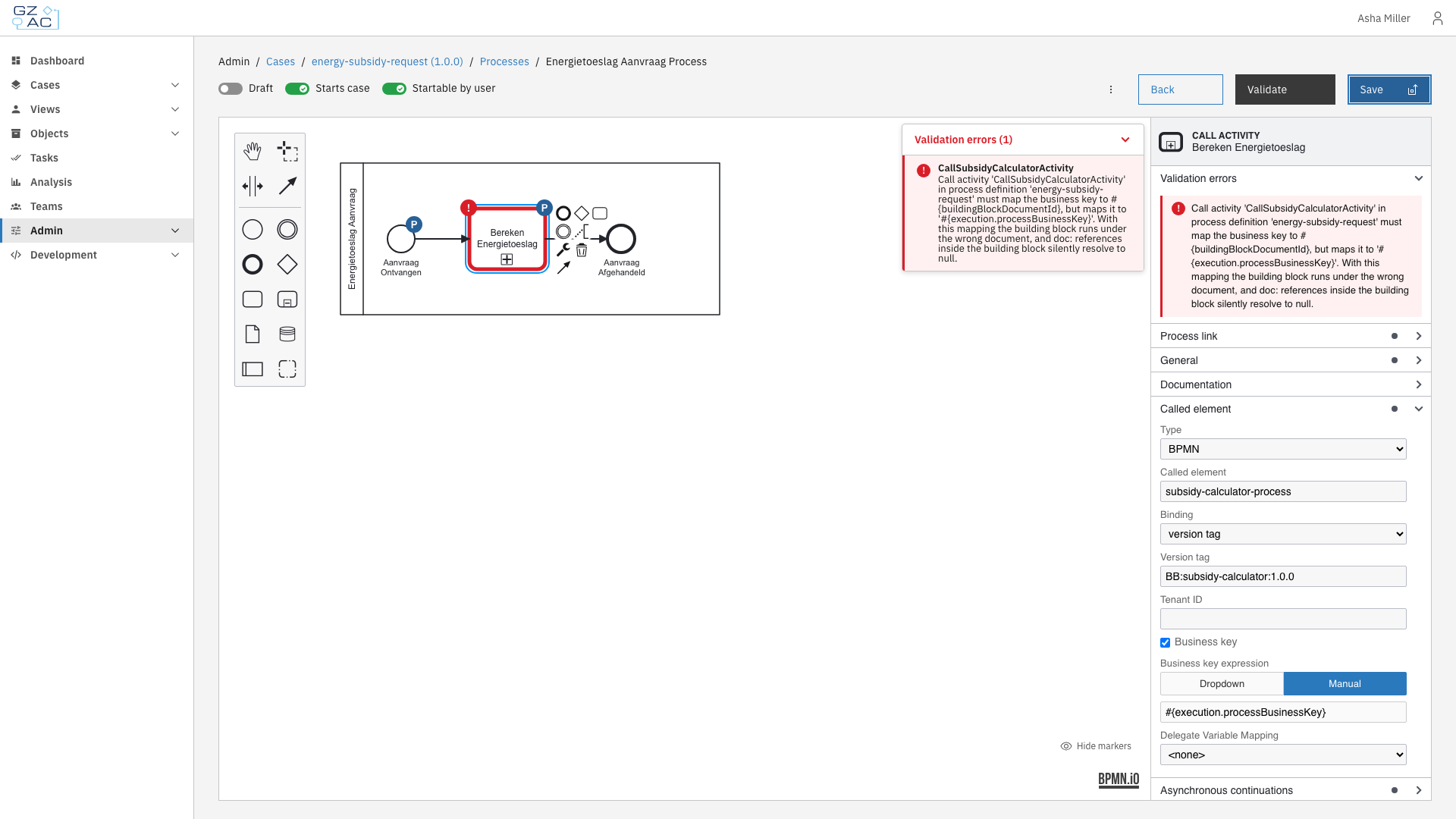
The configuration of a building block call activity is validated when the process is saved, and again when the call activity starts. This includes the business key mapping and the rule that the building block side of every input and sync mapping is a building block field.
When validation fails, the save is blocked: the editor highlights the call activity and shows a message that explains how to fix the configuration.

Passing files and attachments
Files are passed to a building block by reference, using the resource id of the file in the temporary resource storage. The temporary resource storage is not bound to a case, so a resource id remains usable inside any building block. For example, to send a generated document as an email attachment from a building block:
In the case process, generate the document (for example with the SmartDocuments plugin). The generated file is stored in the temporary resource storage and its resource id is written to a process variable.
Give the building block a field for the attachment list (for example attachmentIds) and map the process variable to it as an input.
In the mail action inside the building block, reference the field as doc:/attachmentIds.
Last updated